
What Does a Normal Smile Look Like?
Northern Smiles Dentistry & Orthodontics
4 min readAugust 8, 2026
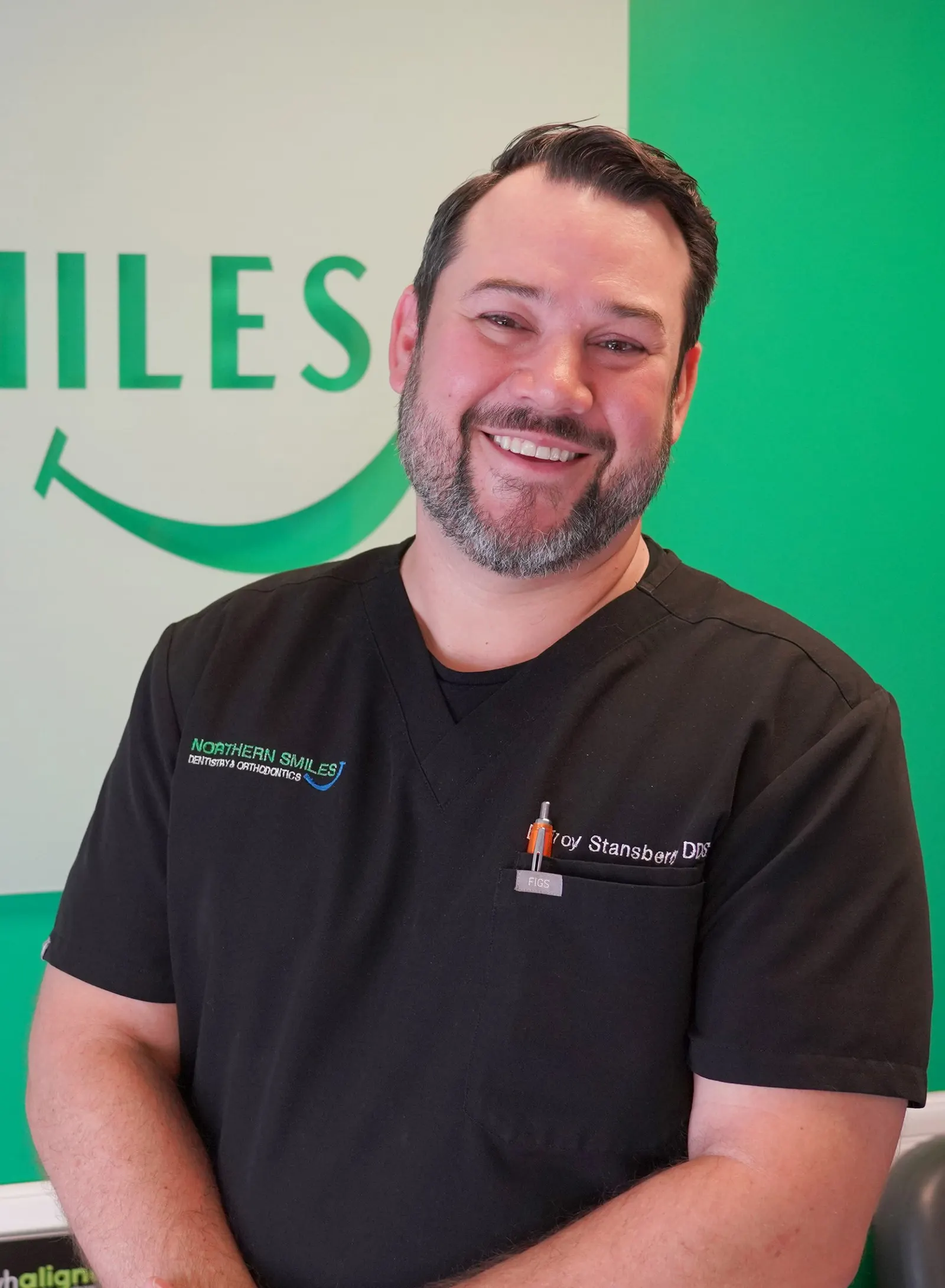
Reviewed by Dr. Troy Stansberry, D.D.S.
Ready to book your visit?
Our Phoenix team will help you plan treatment and answer your questions — we reply within 24 hours.
Request an appointment (602) 944-9197On this page
A normal smile shows most of the upper front teeth, with the upper teeth resting slightly in front of and over the lower teeth — usually covering about 1 to 3 millimetres of them. A small overbite is normal and healthy. It only becomes a problem when the overlap is large enough to change how the teeth meet or wear.
If you have found yourself looking in the mirror and wondering whether your bite is “right,” this is the guide. It covers what dentists actually mean by a normal smile, how overbite differs from overjet, and the point at which the difference stops being cosmetic and starts being worth treating.
What dentists mean by a “normal” smile
There is no single correct smile, and the range of healthy variation is wider than most people assume. But there are a few relationships that dentists look at:
- The upper teeth sit slightly over the lower ones. When you close your mouth, the top front teeth should overlap the bottom front teeth by a small amount rather than meeting edge to edge.
- The midlines roughly line up. The gap between your two upper front teeth should sit near the gap between the two lower ones, and near the middle of your face.
- The teeth meet evenly on both sides. Back teeth on the left should contact at about the same time as those on the right.
- The upper teeth follow the curve of the lower lip when you smile.
None of these have to be perfect. Nearly everyone has some asymmetry, and it is invisible to everyone but the person who owns it.
Overbite vs normal: how much overlap is too much?
This is where most of the confusion sits, because two different measurements get called “overbite” in everyday conversation.
| Term | What it measures | Typical healthy range |
|---|---|---|
| Overbite | How far the upper front teeth vertically cover the lower ones | 1 – 3 mm, or roughly 10–30% of the lower tooth |
| Overjet | How far the upper front teeth sit forward of the lower ones horizontally | 1 – 3 mm |
| Deep bite | An overbite large enough that the lower teeth are mostly or entirely hidden | Beyond the normal range |
| Open bite | A gap between upper and lower teeth even when the jaws are closed | Outside the normal range |
So a normal smile has some overbite. What people usually mean by “having an overbite” is a deep bite — enough vertical overlap that the lower front teeth barely show, or sometimes bite into the roof of the mouth.
When an overbite is worth treating
A bite that looks slightly uneven but functions well may need nothing at all. The reasons to treat are mostly mechanical rather than cosmetic:
- Uneven wear. When the load is concentrated on a few teeth rather than spread across the arch, enamel wears through faster on those teeth.
- Cracked or chipped teeth. Front teeth taking force they were not shaped to take are more prone to fracture.
- Jaw discomfort. A bite that closes unevenly puts asymmetric load through the jaw joint.
- Gum recession. Teeth pushed beyond their comfortable position can lose gum coverage over time.
- Difficulty cleaning. Crowded or overlapped teeth trap plaque where a brush cannot reach, which raises the risk of decay and gum disease.
Left alone, these tend to get more expensive to fix than the original misalignment would have been.
Other bite patterns worth knowing
Overbite is one of several ways a bite can sit outside the usual range:
- Underbite — the lower teeth sit ahead of the upper ones.
- Crossbite — upper and lower teeth close in the wrong relationship, often on one side.
- Open bite — a gap remains between the top and bottom teeth even with the jaws shut.
- Crowding and spacing — too little or too much room for the teeth present.
When should a bite first be checked?
Most bite problems become visible around age 7, once enough permanent teeth have arrived to show how the jaws are relating to each other. That is why an orthodontic evaluation around that age is useful even when nothing looks obviously wrong — it is about spotting the pattern early, not starting treatment immediately.
Adults are not too late. Teeth move at any age, and a large share of orthodontic patients are adults treating something they have lived with for decades.
What treatment usually involves
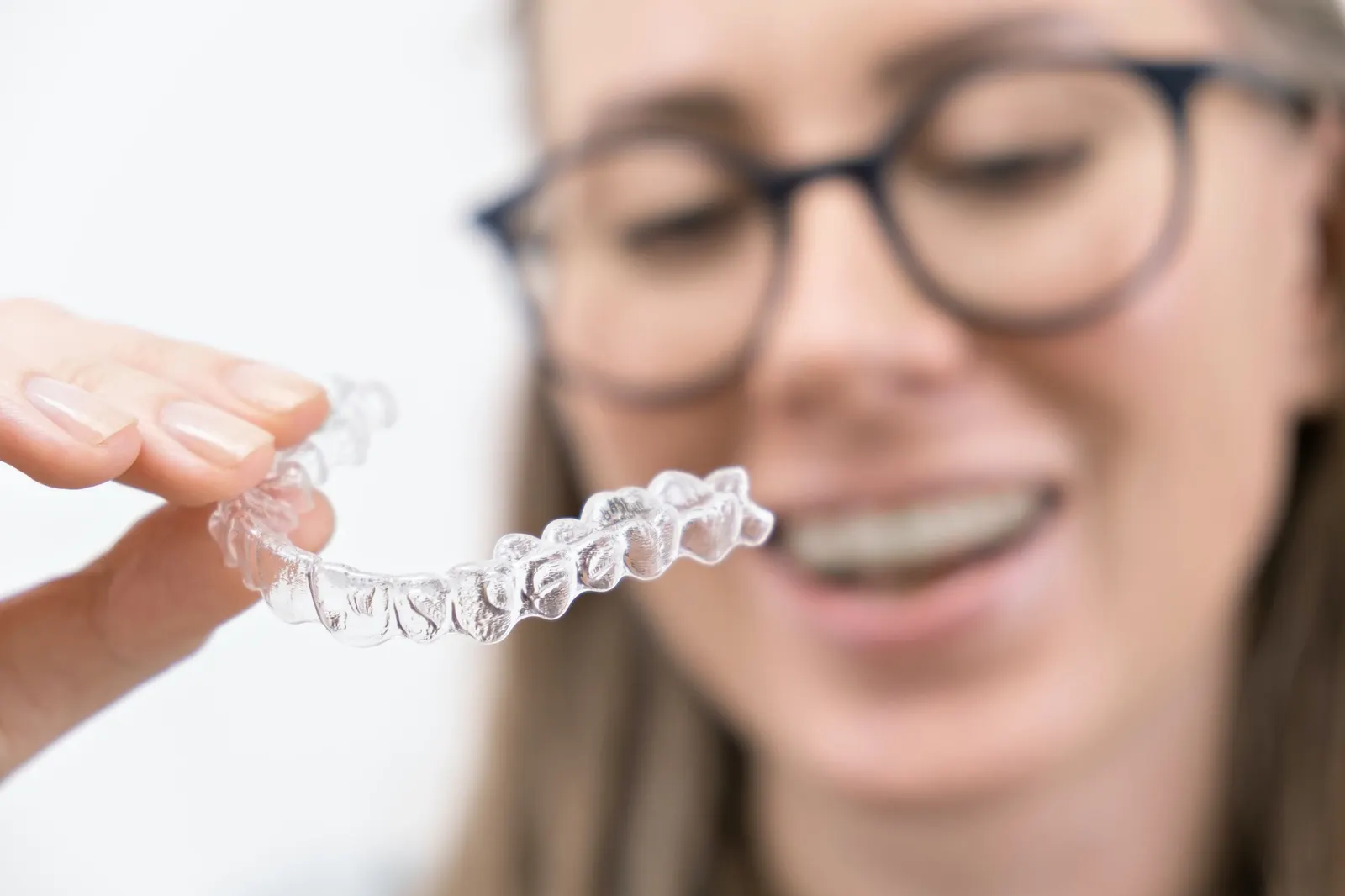
If a bite does need correcting, the options are the same ones used for straightening generally: traditional metal braces, tooth-coloured ceramic braces, or clear aligners. Which one suits depends on how far the teeth have to travel — aligners handle mild to moderate cases well, while significant bite correction more often calls for braces.
Treatment typically runs 18 months to two years, with a short adjustment visit every few weeks, and finishes with a retainer to hold the result.
Not sure whether what you are seeing is normal? A consultation is the only way to know, and ours are free. Read more about orthodontic treatment in Phoenix, compare clear aligners against braces, or see what braces cost in Arizona. You can also book a consultation at our North Phoenix office.
This article is for general educational purposes and is not a substitute for professional dental advice. Please see our Medical Disclaimer.
Related services
Care from our Phoenix team that connects to this topic.
Testimonial
What Our Patients Say
I have been Troy's patient for some years now and by far he's been the best dentist in my life. Everyone at Northern Smile Dentistry and Orthodontics are knowledgeable and excited to help you with any questions or concerns you might have. if you are searching for the perfect dentist, you need to call Troy and his team! NOW!

"Been twice and can't express enough how pleasant, professional and pleased I am. I just told my I am looking forward to my next visit. How great is that?"

"We have been so happy with Northern Smiles! Our family has been going here for almost 10 years. They have given us great care & always so respectful. Never have made any of our 3 kids uncomfortable. Always open to questions and don't feel rushed. I recommend them all the time. THANK YOU Dr Stansberry!"

Medically reviewed by
Dr. Troy Stansberry, D.D.S.
Dr. Troy Stansberry grew up in Phoenix, AZ and attended Creighton University for his bachelors, and Creighton School of Dentistry for his D.D.S. degree.
Meet Dr. StansberryKeep reading
Orthodontics· 4 min read
Is dental deep cleaning really necessary?
Is deep cleaning necessary? Northern Smiles Dentistry in Phoenix offers insights on the procedure and its benefits for optimal oral health.
Read articleOrthodontics· 4 min read
How much do clear aligners cost in Phoenix?
Wondering about Invisalign costs in Phoenix? Northern Smiles Dentistry offers clear aligners. Get transparent pricing for a straighter smile in 2025.
Read article
Orthodontics· 4 min read
What is the most popular cosmetic dental procedure?
Explore popular cosmetic dentistry at Northern Smiles Dentistry. Achieve a brighter smile with teeth whitening and other effective treatments.
Read articleReady to talk to a Phoenix dentist?
Book a visit with Northern Smiles Dentistry & Orthodontics — we'll get back to you within 24 hours.