
Northern Smiles Pediatric Dentistry
Pediatric Dentist in North Phoenix, AZ
On this page
All Ages Welcome
We are a family-oriented dental office that specializes in providing high quality, comprehensive dental care to families and individuals of all ages.
Affordable Treatments
Quality children's dental care shouldn't strain the family budget. We keep our pricing fair, accept most insurance plans, and help you make the most of your children's coverage.
Flexible Scheduling
We know family life is busy, so we arrange kids' checkups around school and work to make keeping up with their dental care easy.
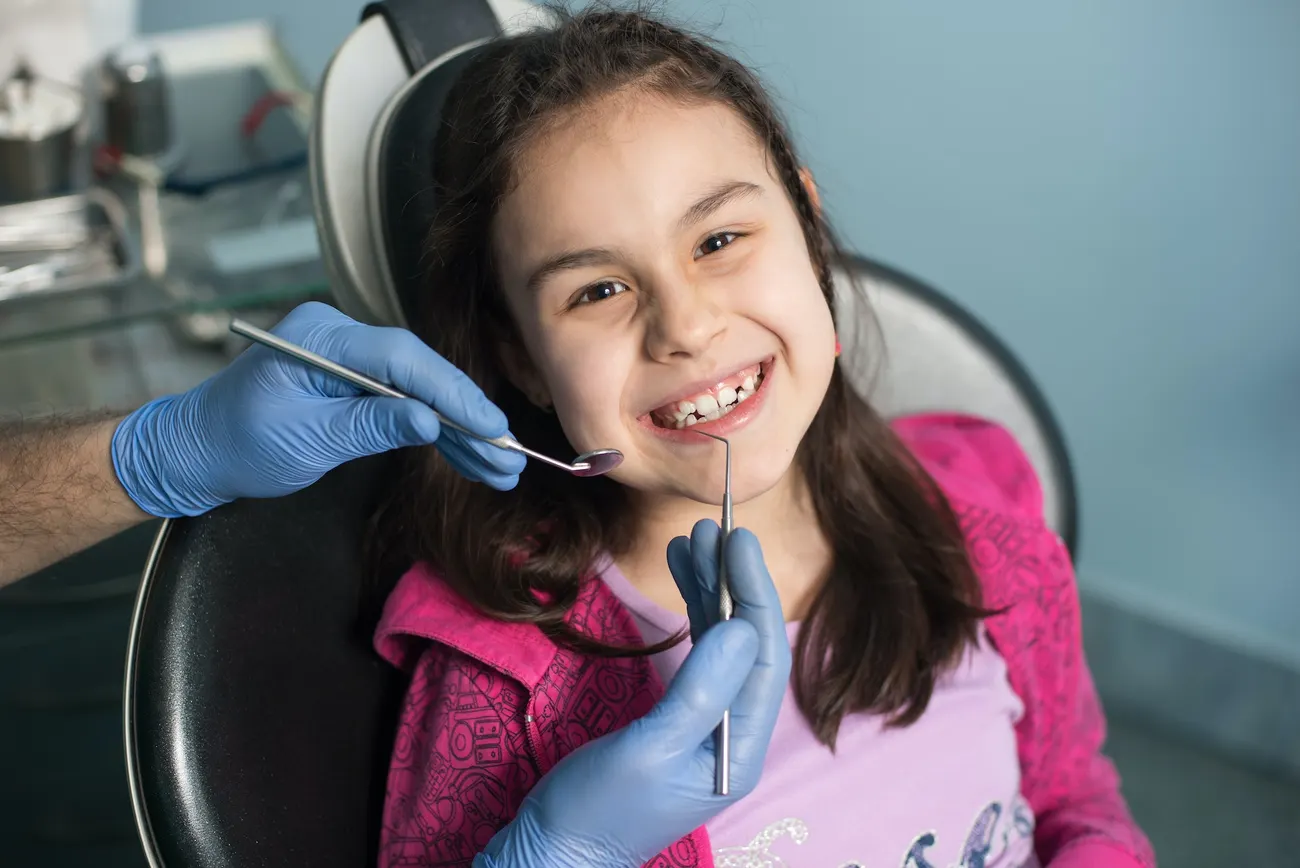
Dental Team Who Cares About Your Family
Why Choose Northern Smiles For Your Pediatric Dentistry?
At Northern Smiles Dentistry, we understand how important it is to take care of your entire family’s dental needs. From the youngest to the oldest, we strive to provide each and every patient with a relaxed, enjoyable experience in a clean and friendly environment. We believe that every member of our team is crucial in ensuring that your experience with us is top-notch from start to finish. Northern Smiles Dentistry is the a unique dental office tailor-made to our community, we can't wait to meet your whole family!
Your Child's Dental Health
Benefits of Maintaining Your Child's Dental Health
Your child won’t keep his or her first teeth forever, but that doesn’t mean those tiny pearly whites don’t need conscientious care. Maintaining your child’s dental health now will provide health benefits well into adulthood, as primary (baby) teeth serve some extremely important functions.
For one thing, primary teeth serve as guides for the eruption of permanent (adult) teeth, holding the space into which these new teeth will erupt. The crowns (tops) of the permanent teeth actually push against the roots of the baby teeth, causing them to resorb, or melt away. In this way, the adult teeth can take their proper place.
What’s more, your child’s primary teeth will be there for most of childhood, helping your child to bite, chew and speak. For the first six or so years, he or she will be relying on primary teeth exclusively to perform these important functions. Until around age 12, your child will have a mix of primary and permanent teeth. You will want to make sure those teeth stay healthy and are lost naturally — when it’s time.
Early Childhood
Your Child’s First Dental Appointment
The American Academy of Pediatric Dentistry recommends that your child see a dentist by his/her first birthday. Though this may sound early, learning proper pediatric oral hygiene techniques, checking for cavities, and watching for developmental problems is extremely important.
There are a number of forms of tooth decay that can affect babies and small children. Early Childhood Caries (tooth decay) can develop rapidly, progressing from the hard, outer enamel layer of a tooth into the softer, inner dentin in six months or less.
Most of all, it’s important for your child to have a positive experience at the dental office as he/she will be a regular visitor for years to come.
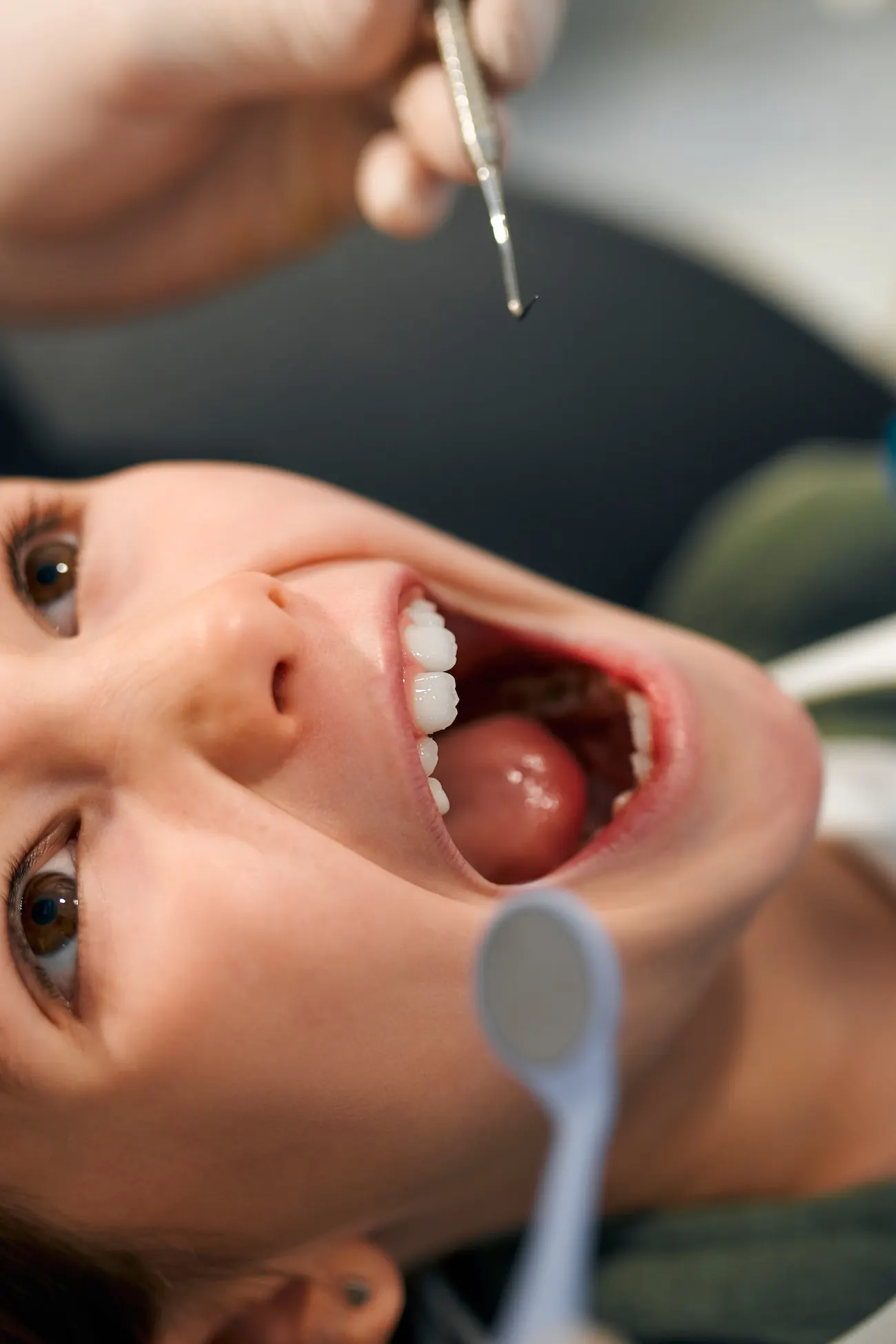
Pediatric Dental Treatments
There are a variety of dental treatments offered to prevent tooth decay in children, or to save or repair teeth when necessary. They include:
Topical Fluoride
Fluoride incorporates into the enamel of teeth, making it harder and more resistant to decay. Although there is a small amount of fluoride in toothpastes and in some drinking water supplies, a higher concentration can be applied professionally to your child’s teeth for maximum protection.
Dental Sealants
A plastic coating can be applied at the dental office to prevent cavities by sealing the little grooves on the chewing surfaces of back teeth known as “pits and fissures.” These little crevices become the perfect environments for decay-causing bacteria. Immature tooth enamel is more permeable and therefore less resistant to tooth decay. Dental sealants are easy to apply and provide years of protection (Watch Dental Sealant Video).
Root Canal Treatment
Perhaps you have had a root canal treatment yourself, to save an injured or severely decayed tooth. Well, sometimes children need root canals, too. As mentioned above, baby teeth are important guides to the permanent teeth that are already forming beneath your child’s gums. Therefore, saving them from premature loss can help prevent a malocclusion (“mal” – bad; “occlusion” – bite) that requires orthodontic treatment.
Bonding
Chips and minor fractures to front teeth — common childhood occurrences — can be repaired with tooth-colored bonding materials. These lifelike resins made of plastic and glass can be used on baby teeth as well as permanent teeth and last until the youngster has completed facial growth (Watch Bonding Video).
Your Child's Development
Orthodontic Concerns
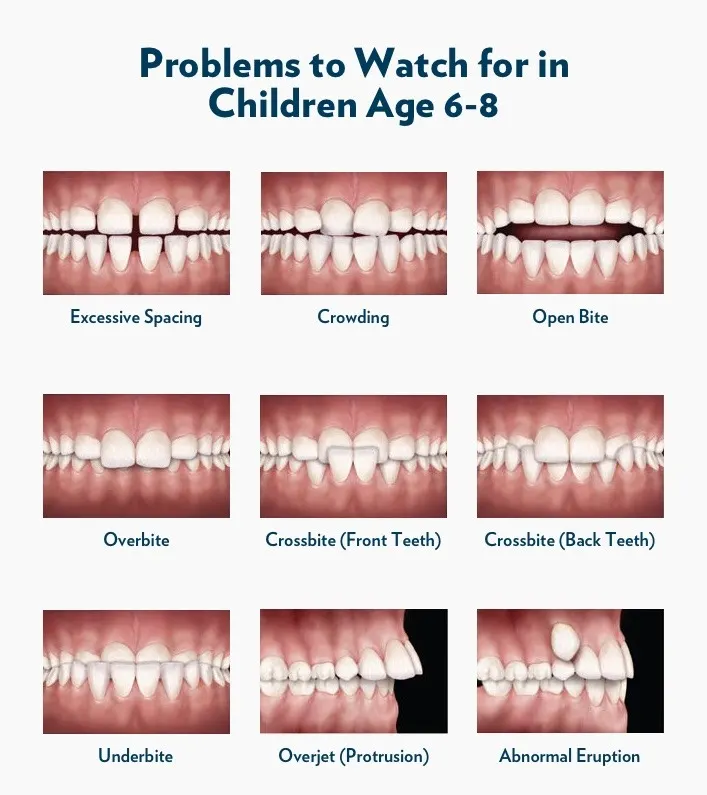
By around age 7, most malocclusions have become evident. Interceptive orthodontic treatment around this time can help direct proper tooth positioning and/or jaw growth, eliminating or simplifying the need for later treatment. There are many orthodontic problems that can be detected early and are examples of why a trained professional should evaluate your child during his/her growth and development.

If Your Child is Active in Sports
Sports & Your Child’s Teeth
If your child is active in sports, a custom-made mouthguard is a highly recommended safeguard. According to the American Dental Association, an athlete is 60 times more likely to suffer dental harm when not wearing one of these protective devices. A custom mouthguard is made specifically for your child using a model of his or her teeth. This will offer greater protection than an off-the-shelf model. It’s an investment that pays off highly in the form of reduced pain, suffering — and dental expenses down the road!

Related Articles
When should your child see a dentist?
| Age | What is happening | What we do |
|---|---|---|
| By age 1, or six months after the first tooth | The first teeth are coming through | A first dental visit — short, gentle, and largely about getting your child comfortable in the chair |
| Around 7 | Enough permanent teeth have arrived to show how the jaws are relating | A first orthodontic evaluation. The American Association of Orthodontists recommends this age — it is about spotting patterns early, not starting treatment |
| Up to around 12 | Some late baby teeth are still present | Regular checkups. Losing a baby tooth early causes spacing problems later, so we treat decay in baby teeth rather than waiting for them to fall out |
More on timing in when should my child first see a dentist, and on later treatment in orthodontics for children and teens.
A family dentist in North Phoenix
With children, the practical question is usually whether an appointment fits between school and everything else. We are on 16th Street between Glendale and Northern Avenues in 85020, close to Sunnyslope and Moon Valley, and we can often see siblings back to back so one trip covers the family, which is how most of our family dentistry in North Phoenix works. More about our North Phoenix dental office. Familiarity helps with children too — the same building and the same faces every six months take a lot of the anxiety out of a dental visit.
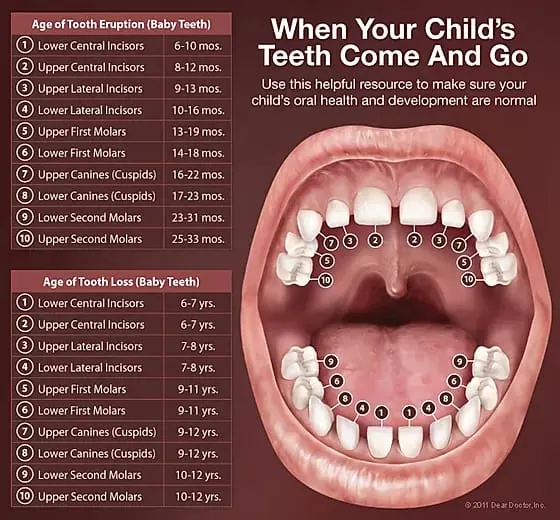
When Your Child's Teeth Come & Go
Your Child's First Teeth
Your child’s 20 baby teeth will begin to appear usually between six and nine months, though in some cases it may start as early as three months or as late as twelve months.
-
Children Teeth
The two lower front teeth tend to erupt first, followed by the two upper ones. The first molars come in next, followed by the canines (eyeteeth). Sometimes your baby can experience teething discomfort during this process. If so, there are courses of action to help make your child more comfortable.
-
Children Gums
Your infant’s gums and newly erupting teeth should be gently wiped after each feeding with a water-soaked gauze pad or damp washcloth. Starting at age 2, when there are more teeth in the mouth, establish a daily brushing routine with a small, soft-bristled toothbrush and no more than a thin smear of fluoridated toothpaste. Your child may need your help with this important task until about the age of 6.
Frequently Asked Questions
When should my child first see a dentist? +
The American Dental Association recommends a first dental visit by age one or within six months of the first tooth appearing. Early visits help kids feel comfortable and let us catch problems early.
How often should children get dental checkups? +
Like adults, most children should visit every six months for a cleaning and exam, unless we recommend a different schedule based on their needs.
How can I prepare my child for the dentist? +
Keep it positive and simple, read kid-friendly books about the dentist, and avoid scary words. Our team is experienced at making visits fun and reassuring.
Are dental X-rays safe for kids? +
Yes. We use modern low-radiation digital X-rays and take them only when needed to check for cavities between teeth or to monitor developing teeth.
How can I prevent cavities in my child's teeth? +
Help them brush twice a day with fluoride toothpaste, limit sugary snacks and drinks, and keep up with regular checkups. We can also apply sealants and fluoride for extra protection.
Related reading
Answers to the questions patients ask us most about this treatment.
Other services
More ways our Phoenix team can help.

Medically reviewed by
Dr. Troy Stansberry, D.D.S.
Dr. Troy Stansberry grew up in Phoenix, AZ and attended Creighton University for his bachelors, and Creighton School of Dentistry for his D.D.S. degree.
Meet Dr. StansberryBook Now
Request An Appointment
Feel free to contact us at Northern Smiles Dentistry with any questions or concerns
Opening Hours
- Monday 07:30 AM - 4:20 PM
- Tuesday 08:30 AM - 5:30 PM
- Wednesday 07:30 AM - 2:00 PM
- Thursday 07:30 AM - 3:20 PM
- Friday 07:00 AM - 2:00 PM
- Saturday - Sunday Closed