
Northern Smiles Dentistry
Dental Implants in North Phoenix, AZ
On this page
Cutting-Edge Dental Implant Technology
We place titanium implant posts that fuse with your jawbone (a process called osseointegration) to support natural-looking crowns, bridges, or dentures. Modern 3D imaging and guided placement make treatment more precise, comfortable, and predictable.
Dental Implant Treatments
Implants help protect your remaining teeth and bone, and they're an investment worth planning for. We'll walk you through every cost and option up front and offer flexible financing, including CareCredit, so treatment fits your budget.
Flexible Scheduling
From your consultation and implant placement to the final restoration, we coordinate each visit around your calendar — whether you're replacing a single tooth or a full arch.
What does dental implant treatment involve?
A dental implant replaces the root of a missing tooth with a titanium post that fuses to the jawbone, then carries a crown made to match the teeth around it. Dr. Troy Stansberry, D.D.S., has placed thousands of implants and plans and places them in our North Phoenix office rather than referring you out to a separate surgeon — so the same team handles the surgery, the restoration and every follow-up visit. Planning begins with an exam and 3D imaging, so the position is mapped before anything is placed. A single implant in Phoenix typically runs $3,000 – $4,500; a full-arch restoration ranges from $12,500 – $45,000 depending on how many implants are needed and which materials are used. You get the full figure in writing, with your insurance verified, before treatment starts. Most cases run across several months: placement, three to six months of healing while the bone integrates, then the final crown.
Reliable and Time-Tested
Why Choose Northern Smiles Dentistry For Dental Implants in Phoenix?
Missing teeth aren't just a cosmetic concern — left untreated, tooth loss can shift your bite, weaken the jawbone, and make eating and speaking harder over time. Dental implants are the closest thing modern dentistry offers to a permanent, natural-feeling replacement.
An implant is a small titanium post that Dr. Stansberry places into the jawbone, where it fuses with the bone over a few months (a process called osseointegration). That post then anchors a custom crown, bridge, or denture — restoring full chewing strength and a natural look that's built to last.
At Northern Smiles Dentistry in Phoenix, we plan every case with 3D imaging to map your bone and nerves before treatment, and we'll tell you up front whether you're a good candidate or need a preparatory step such as a bone graft. From a single missing tooth to a full-arch restoration, we build a clear treatment plan around your needs, timeline, and budget — with CareCredit financing available.

What are dental implants made of?
Dental implants are artificial tooth roots made from biocompatible materials such as titanium. They are surgically placed into the jawbone, where the bone grows against the surface and locks them in position — the same process that makes them a permanent replacement rather than something that sits on top of the gum. Once integrated, an implant supports a crown, a bridge, or a full arch of teeth, and it is cleaned and flossed like a natural tooth. Because the post transmits bite force into the jaw the way a real root does, the bone underneath keeps its shape instead of receding the way it does under a gap or a conventional denture. Northern Smiles has provided implant treatment to patients across Phoenix and the surrounding neighbourhoods, and Dr. Stansberry handles both the surgical and restorative sides in one office.
The American Dental Association keeps a plain-language patient overview of how implants work and who they suit at MouthHealthy.
What types of dental implants do you offer?
Which approach suits you depends on how many teeth are missing and how much bone is available to work with.
- Single tooth implants — one post and one crown, replacing an individual missing tooth without touching the teeth on either side.
- All-on-4 dental implants — a full arch of teeth supported on four strategically angled implants, often possible without separate bone grafting.
- Full arch implants — for patients who have lost most or all of the teeth in the upper or lower jaw, replacing the whole arch on a set of implants.
- Full mouth dental implants — extensive restoration across both arches, planned as a single course of treatment.
- Teeth in a day — a provisional set of fixed teeth placed at the same visit as the implants, so you do not leave without teeth while the bone heals.
Dr. Stansberry will tell you which of these your bone and bite can actually support after an exam and 3D scan, rather than starting from the option you have read about.
This page covers single-tooth and multi-tooth implants. If you are replacing a whole arch, see implant-supported dentures in North Phoenix; for removable full and partial plates, see dentures in Phoenix.
Cost & Financing
How Much Do Dental Implants Cost in Phoenix?
A single dental implant in Phoenix generally runs $3,000 to $6,000. That spread is wide because an "implant" is really three things — the post placed in the jaw, the abutment, and the crown on top — and because some mouths need work before any of it can happen.
What Moves the Number
How many teeth you are replacing, the implant materials used, and whether you need preliminary treatment such as bone grafting or an extraction. A jaw that has been missing a tooth for years has usually lost bone density there, and rebuilding that foundation adds both time and cost.
Comparing Against the Alternatives
Implants cost more up front than a bridge or dentures. They also do not need replacing on the same cycle, they do not rely on grinding down the healthy teeth on either side, and they preserve the jawbone that dentures leave to shrink. Replacing a full arch is usually better served by implant-supported dentures than by individual implants.
Paying For It
Coverage varies widely — many plans treat implants as a major service with an annual maximum well below the total. We accept most PPO plans and offer CareCredit financing so treatment can be spread out. See insurance and financing, or read our full guide to dental implant costs in Phoenix.
The only way to get your real number is an exam and a scan. We will tell you what your case needs before you commit to anything.
| What you are paying for | Typical cost in Phoenix |
|---|---|
| Single implant — post, abutment and crown | $3,000 – $6,000 |
| The implant fixture alone, in a full-arch case | about $1,800 |
| Each crown | about $1,000 |
| Full-arch restoration | $12,500 – $45,000 |
| Full-arch restoration, average | about $34,000 |
We verify your insurance and give you the full figure in writing before treatment begins, and we offer CareCredit financing.
For the full breakdown, including what insurance typically contributes, see dental implant costs in Phoenix and our insurance and financing options.
How are dental implants placed, step by step?
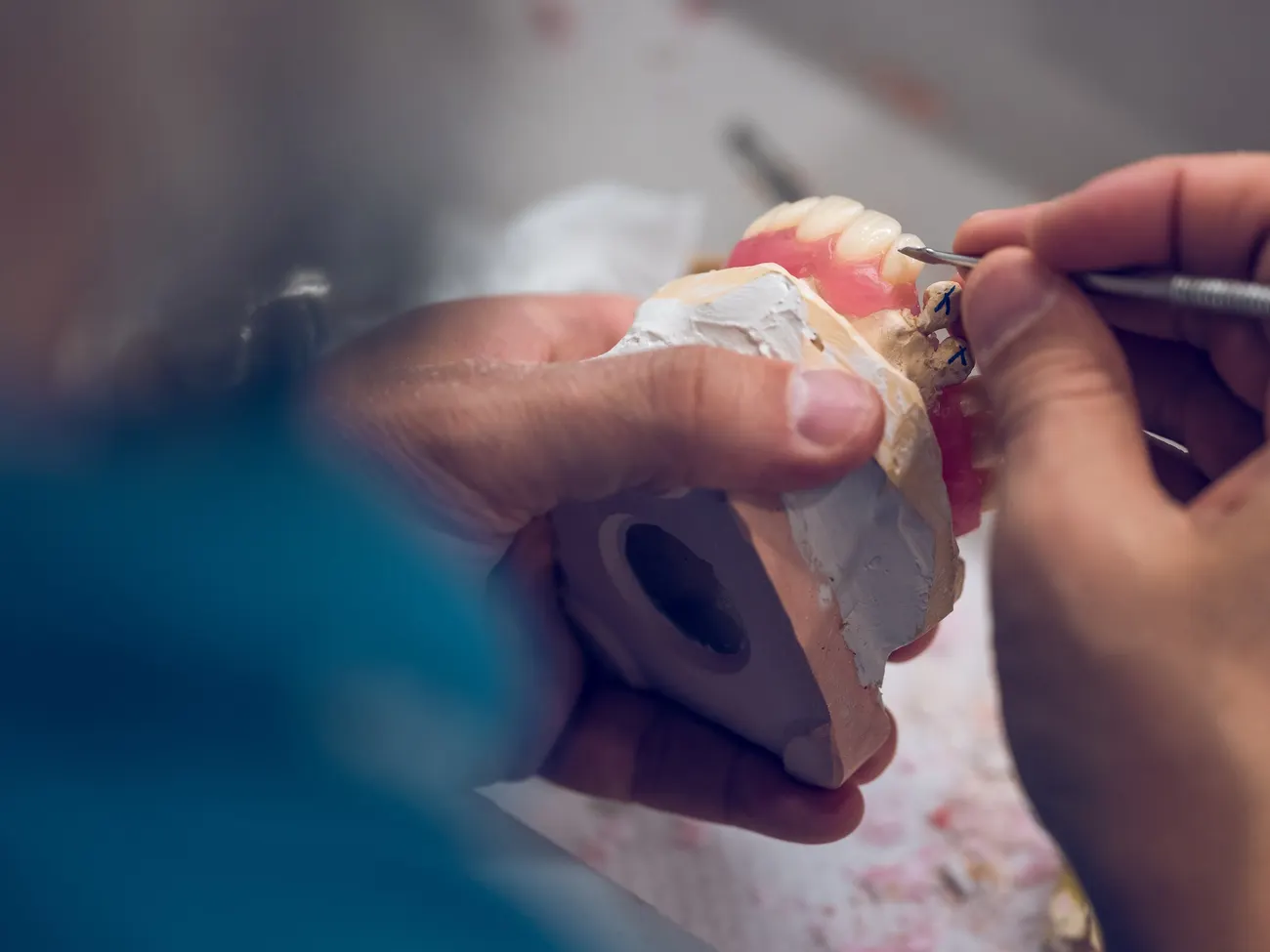
Dental implants are made and fitted in a few steps:
- The first step is to assess your oral health and determine if you are a good candidate for dental implants. Your dentist will look at your bone health, gum health, and overall oral health to see if you are a good candidate.
- If you are a good candidate, your dentist will take a mold of your jawbone. This mold will be used to create a custom-made dental implant.
- The next step is the surgery. During the surgery, your dentist will make a small incision in your gum and insert the dental implant into your jawbone.
- The dental implant will need time to osseointegrate, or fuse with your bone. This process can take anywhere from 3 to 6 months.
- Once the dental implant is osseointegrated, your dentist will attach an abutment to the implant. The abutment is a small post that will support the artificial tooth.
- Finally, your dentist will fit the artificial tooth to the abutment. The artificial tooth will be made to look and feel like your natural teeth.
The entire process of getting dental implants can take several months, but it is a permanent solution for missing teeth. Dental implants can improve your smile, your chewing ability, and your overall oral health.
What happens at each stage of the process?
Here are some additional details about each step of the process:
- The mold of your jawbone: This mold is used to create a custom-made dental implant that will fit your jawbone perfectly. The mold is made using a putty-like material that is pressed against your gums.
- The surgery: The surgery to insert the dental implant is usually done under local anesthesia. Your dentist will make a small incision in your gum and then drill a hole in your jawbone. The dental implant is then inserted into the hole and secured in place.
- Osseointegration: Osseointegration is the process by which the dental implant fuses with your jawbone. This process takes anywhere from 3 to 6 months. During this time, it is important to avoid chewing on the side of your mouth with the dental implant.
- The abutment: The abutment is a small post that is attached to the dental implant. The abutment will support the artificial tooth. The abutment is usually made of titanium or another biocompatible material.
- The artificial tooth: The artificial tooth is made to look and feel like your natural teeth. It is usually made of porcelain or a composite material.
After the dental implant is fitted, you will need to care for it just like you would your natural teeth. You will need to brush and floss regularly, and you will need to see your dentist for regular checkups.
Dental implants are a great option for people who have lost one or more teeth. They are a permanent solution that can improve your smile, your chewing ability, and your overall oral health.
Implant treatment close to home in North Phoenix
Implant treatment runs over several appointments across a few months — placement, healing checks, then the crown — so how far you have to drive matters more than it does for a one-off visit. We are on 16th Street between Glendale and Northern Avenues in 85020, just south of Sunnyslope and a few minutes from the North Mountain neighbourhoods. Dr. Stansberry places implants here rather than referring them out, which keeps the whole course of treatment at one address. More about our North Phoenix dental office.
Frequently Asked Questions
How many dental implants has Dr. Stansberry placed? +
Thousands. He trained in implants during his residency at Loma Linda Veterans Affairs Medical Center and has placed them throughout his career in Phoenix. He does the surgical placement and the restoration himself rather than splitting the case between a surgeon and a restoring dentist, which is also why there is no separate specialist referral markup on the quote.
How much do dental implants cost in Phoenix? +
Cost depends on how many implants you need, whether a bone graft is required, and the type of restoration (crown, bridge, or denture). Because it's a multi-step procedure, we provide a personalized written estimate at your consultation and offer CareCredit financing to make it manageable.
How long do dental implants last? +
With good oral hygiene and regular checkups, the titanium implant post is designed to last for decades — often a lifetime. The visible crown may eventually need replacement after years of normal wear, much like any tooth restoration.
Am I a good candidate for dental implants? +
Most healthy adults with one or more missing teeth and adequate jawbone are good candidates. If you've lost bone, a graft can often rebuild the site first. Dr. Stansberry evaluates your bone, gums, and medical history at your consultation to confirm.
Does getting a dental implant hurt? +
Implant placement is done under local anesthesia, so you shouldn't feel pain during the procedure. Most patients report only mild soreness for a few days afterward, easily managed with over-the-counter pain relievers.
How long does dental implant treatment take? +
After placement, the implant typically needs about three to six months to fuse with the bone before the final crown or bridge is attached. Timelines vary by patient and whether grafting is needed.
What happens if a dental implant fails? +
Implant failure is uncommon, but it happens. The two causes we see published warnings about most often are the ones we tell every patient about beforehand: tobacco use, which slows healing and raises the risk of your body rejecting the implant, and poor oral hygiene around the implant site. Because Dr. Stansberry both places and restores implants in this office, follow-up stays with the same team rather than being passed between a surgeon and a restoring dentist. Call us if an implant feels loose, the gum around it becomes sore or swollen, or your bite starts to feel uneven — those are the signs worth checking early.
Related reading
Answers to the questions patients ask us most about this treatment.
How long does a dental implant procedure take?
Dental implants at Northern Smiles Dentistry: Learn the dental implant timeline in 2025. Get a lasting smile with our guide to the procedure.
Read articleHow much do dental implants cost in Phoenix?
What dental implants cost in Phoenix, AZ in 2026 — price ranges by implant type, what insurance covers, and financing options.
Read articleHow much does most dental insurance pay for implants?
Discover how much most dental insurance pays for implants and learn about coverage options for your dental implant procedure in the U.S.
Read articleOther services
More ways our Phoenix team can help.
Medically reviewed by
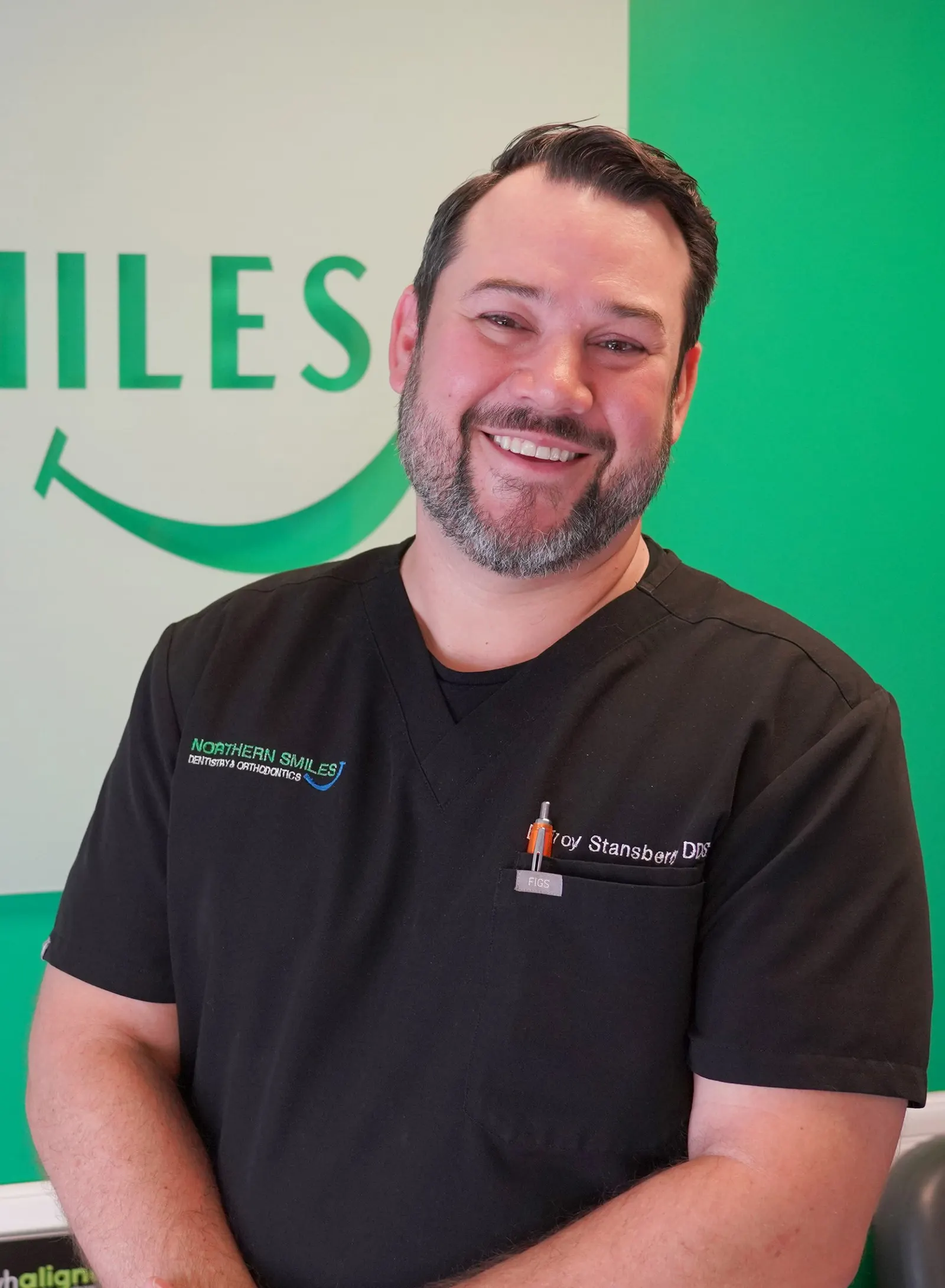
Dr. Troy Stansberry, D.D.S.
Dr. Troy Stansberry grew up in Phoenix, AZ and attended Creighton University for his bachelors, and Creighton School of Dentistry for his D.D.S. degree.
Meet Dr. StansberryBook Now
Request An Appointment
Feel free to contact us at Northern Smiles Dentistry with any questions or concerns
Opening Hours
- Monday 07:30 AM - 4:00 PM
- Tuesday 08:30 AM - 5:30 PM
- Wednesday 07:30 AM - 2:00 PM
- Thursday 07:30 AM - 3:00 PM
- Friday 07:30 AM - 2:00 PM
- Saturday - Sunday Closed