
Northern Smiles Dentistry Oral Cancer Screenings
Oral Cancer Screenings in North Phoenix, AZ
On this page
Oral Cancer Screenings
Oral cancer strikes three times as many victims as cervical cancer. It is one of the few types of cancer that has not seen a significant reduction in incidence over the past thirty years.
Affordable Treatments
An oral cancer screening is a low-cost, high-value part of your care — a quick check we include with your routine exam, so safeguarding your health doesn't mean an expensive extra.
Flexible Scheduling
Because screening happens during your routine checkup, protecting your health is as easy as keeping up with regular visits, which we schedule around your calendar.
Early Detection Can Save Lives
Why Oral Cancer Screenings are Important
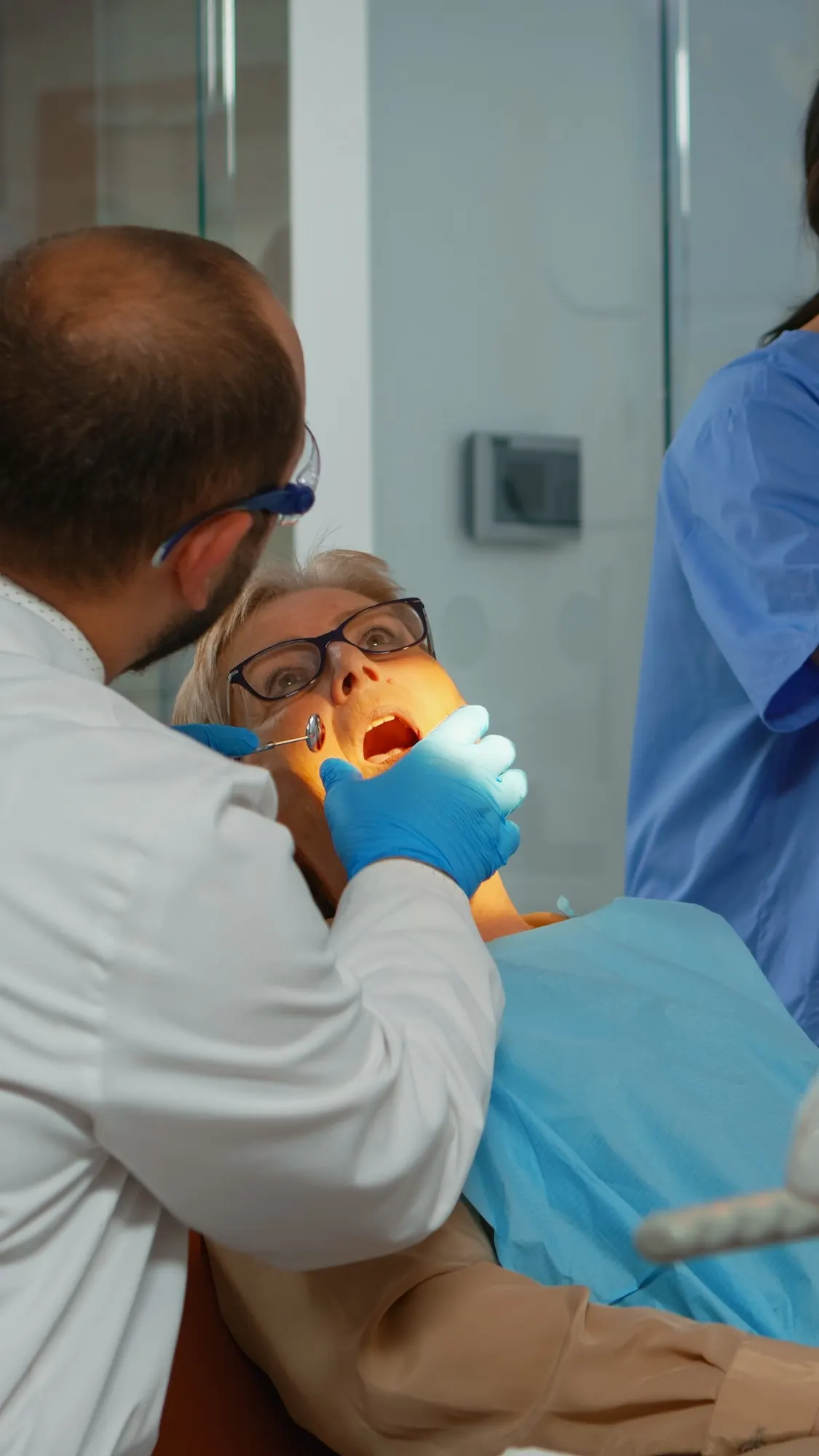
Oral cancer screenings are a precautionary measure just like gums disease screenings. Oral cancer can affect many areas of your mouth such as the lips, throat, and cheeks. During the screening, we will check all of the areas mentioned as well as examine for red or white patches, mouth sores, bumps, or lumps in the tissue of your mouth. On occasion and if needed, we will check your mouth with a screening light that will make affected tissue white or use a blue dye that will stain abnormalities.
Oral cancer strikes three times as many victims as cervical cancer. It is one of the few types of cancer that has not seen a significant reduction in incidence over the past thirty years, and recent research has shown a strong association with Human Papilloma Virus (HPV), which can be sexually transmitted. For this reason, many oral health care professionals now believe that all individuals over the age of 18 should have at least an annual comprehensive oral examination, and ideally at every dental hygiene visit.

Full Dentures
Detecting Potential Problems Earlier
Oral cancer is typically discovered in late stages when the five-year survival rate is only 22%. If detected in the early stages, however, the five-year survival rate is 80% or higher. The VELscope® System can also help discover abnormal growths before they become cancerous. We have always conducted an annual comprehensive oral cancer screening for all of our patients, but now the VELscope® System will help us see things we might have missed previously. By detecting potential problems earlier, we will be providing our patients with the best health care currently available.
What Happens
What an Oral Cancer Screening Involves
It takes about two minutes and it is part of your routine exam — there is no separate appointment, and for most patients no extra charge.
The Visual Exam
We look over the whole of the mouth: the tongue including the underside and sides, the floor of the mouth, the roof, the inside of the cheeks and lips, the back of the throat, and the tonsil area. We are looking for white or red patches, sores that have not healed, and any change in the texture of the tissue.
The Physical Exam
We feel along the jaw and neck for swollen lymph nodes, and check inside the mouth for lumps or hardened areas that are easier to feel than to see. Many early changes are found this way rather than visually.
If We Find Something
Most findings turn out to be harmless — a cheek bite, an irritation from a denture edge, or ordinary thrush. The usual next step is simply to re-examine the area in about two weeks. Anything that has not resolved by then gets referred for a biopsy, which is the only way to know for certain. We will tell you plainly what we have found and what it most likely is, rather than leaving you to guess.
Know The Signs
Warning Signs and Risk Factors
Oral cancer is highly treatable when caught early and much less so when it is not, which is the entire reason screening exists. The difficulty is that early stages rarely hurt.
See a Dentist If You Notice
A sore, ulcer or patch that has not healed within two weeks. A white or red patch anywhere in the mouth. A lump or thickening in the cheek, lip, or neck. Persistent hoarseness or a feeling that something is caught in your throat. Difficulty or discomfort swallowing or moving the jaw. Numbness anywhere in the mouth. Loose teeth with no obvious dental cause.
The two-week rule is the one worth remembering. Ordinary mouth injuries heal quickly; things that do not heal need looking at.
What Raises Risk
Tobacco in any form, including chewing tobacco, is the largest factor. Heavy alcohol use raises it, and combining the two raises it far more than either alone. HPV infection is now a leading cause of cancers at the back of the mouth and throat, and those cases increasingly appear in people who have never smoked. Risk also rises with age, and sun exposure is a specific risk for the lips — relevant in Phoenix, and a reason to use lip balm with SPF.
But a meaningful share of cases occur in people with none of these risk factors, which is why screening is part of every routine visit rather than something we do only for smokers.
Which warning signs should you get checked?
Early-stage oral cancer rarely hurts, which is exactly why screening exists and why these signs are worth acting on rather than watching.
| What you notice | When it matters |
|---|---|
| A sore, ulcer or patch anywhere in the mouth | If it has not healed within two weeks |
| A white or red patch | Anywhere in the mouth, at any time |
| A lump or thickening | In the cheek, lip or neck |
| Persistent hoarseness, or a feeling that something is caught in your throat | If it persists rather than coming and going |
| Difficulty or discomfort swallowing, or moving the jaw | At any time |
| Numbness anywhere in the mouth | At any time |
| Loose teeth with no obvious dental cause | At any time |
None of these means cancer — most turn out to be something ordinary. But oral cancer is highly treatable caught early and much less so caught late, so two minutes at a routine checkup is the whole point. The National Institute of Dental and Craniofacial Research publishes patient information on oral conditions at NIDCR.
Screenings as part of a North Phoenix checkup
An oral cancer screening takes a couple of minutes and happens inside a normal checkup, so it costs you no extra trip. That checkup is on 16th Street between Glendale and Northern Avenues, a few minutes from Sunnyslope and the North Mountain neighbourhoods. Hours are on our North Phoenix dental office. If we do find something worth watching, having your dentist nearby makes the two-week recheck straightforward rather than something you put off.
Frequently Asked Questions
What is an oral cancer screening? +
It's a quick, painless visual and physical examination of your mouth, throat, and neck to look for early signs of oral cancer or precancerous changes — typically done as part of your routine checkup.
Does an oral cancer screening hurt? +
Not at all. We simply look at and gently feel the tissues of your mouth, tongue, and neck. It takes only a few minutes and is completely painless.
Who is at risk for oral cancer? +
Risk is higher for tobacco and heavy alcohol users, people with HPV, and those with significant sun exposure (for lip cancer), but oral cancer can affect anyone — which is why routine screening matters.
What are the warning signs of oral cancer? +
Watch for sores that don't heal, red or white patches, lumps, persistent soreness, or difficulty swallowing. If you notice any of these, contact us promptly.
How often should I be screened? +
We recommend a screening at each routine dental checkup, generally every six months, so any changes are caught as early as possible.
How often should I have an oral cancer screening? +
At every routine dental visit — for most people that means twice a year. It is built into your regular exam rather than booked separately.
Does an oral cancer screening cost extra? +
For most patients it is included in a routine exam at no additional charge. If a finding needs further investigation we will explain the cost before anything is done.
Does the screening hurt? +
No. It is a visual examination plus gentle feeling along the jaw, neck and inside the mouth. Nothing is cut, and no anaesthetic is needed.
I do not smoke. Do I still need screening? +
Yes. A significant proportion of oral cancers occur in people who have never used tobacco, and HPV-related cases in particular are rising among non-smokers. Screening takes two minutes and is part of your normal exam.
Related reading
Answers to the questions patients ask us most about this treatment.
Other services
More ways our Phoenix team can help.
Medically reviewed by
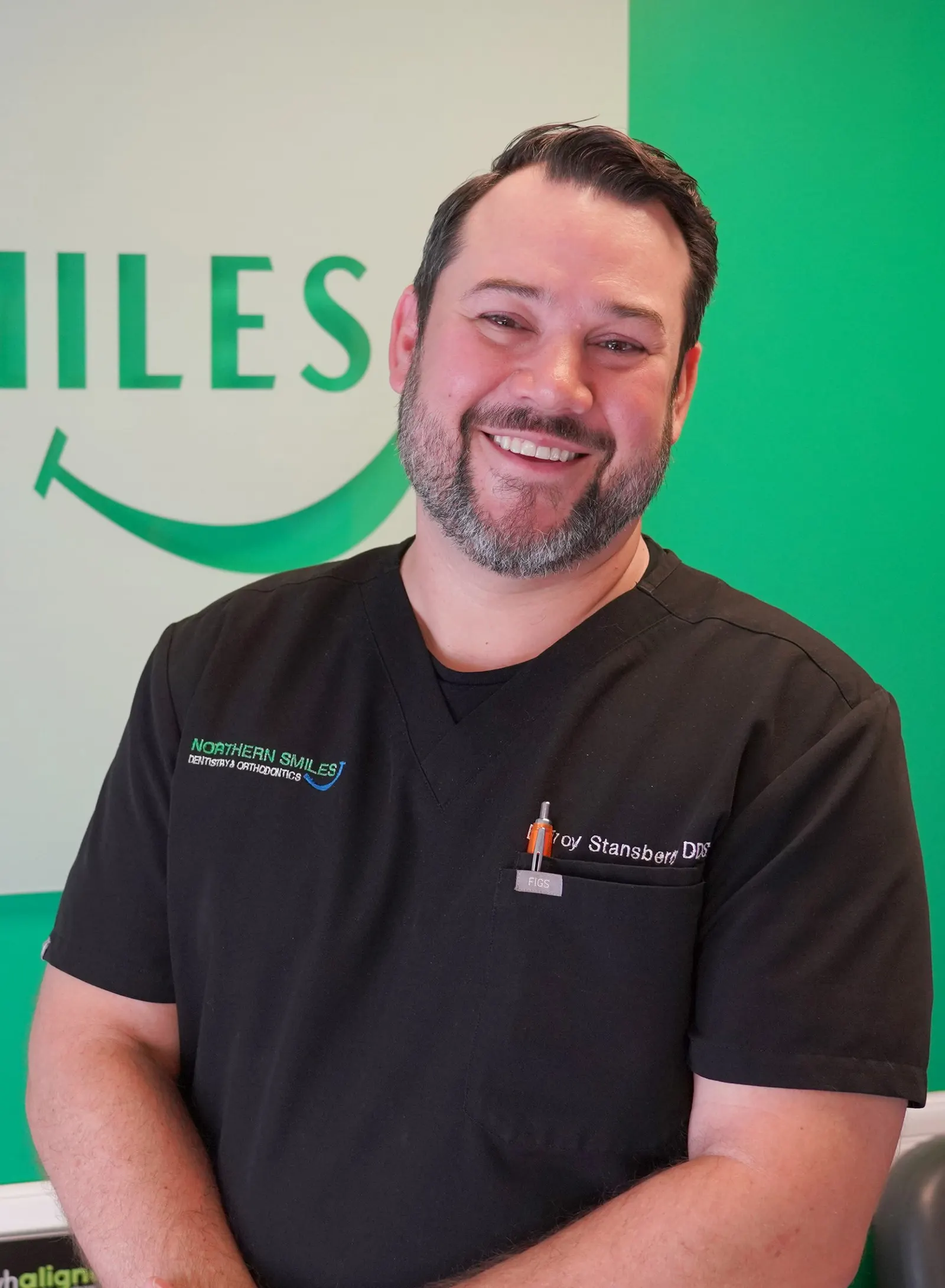
Dr. Troy Stansberry, D.D.S.
Dr. Troy Stansberry grew up in Phoenix, AZ and attended Creighton University for his bachelors, and Creighton School of Dentistry for his D.D.S. degree.
Meet Dr. StansberryBook Now
Request An Appointment
Feel free to contact us at Northern Smiles Dentistry with any questions or concerns
Opening Hours
- Monday 07:30 AM - 4:20 PM
- Tuesday 08:30 AM - 5:30 PM
- Wednesday 07:30 AM - 2:00 PM
- Thursday 07:30 AM - 3:20 PM
- Friday 07:00 AM - 2:00 PM
- Saturday - Sunday Closed